Both sides of the counter
The DIY crowd makes good points. Homemade masks are cheap, you know exactly what is in the bowl, there is no packaging waste, and the ritual itself is relaxing. Honey has mild antibacterial properties and medical-grade manuka honey is used in wound dressings. Plain yogurt, mashed banana and finely ground oats are all gentle for most people.
The cautious side has stories, and some of them end in clinics. Your stomach is built to handle acid, spice and alkali; the outer layer of your skin is a thin, slightly acidic barrier. Research summarised by Lambers and colleagues in 2006 found that healthy skin surface pH sits naturally below 5. Food that is perfectly safe at dinner can be harsh, sensitising or even phototoxic when left on the face.
The do-not-use shelf
- Lemon and lime juice: very acidic, and the furocoumarins in citrus can trigger phytophotodermatitis, blistering burns and brown marks after sun exposure. Dermatologists even nickname it "margarita dermatitis".
- Baking soda: pH around 9, far above skin's natural range; repeated scrubs can leave skin tight, red and reactive.
- Cinnamon, chilli and raw garlic: common irritants; garlic has caused chemical burns when left on skin.
- Undiluted apple cider vinegar: chemical burns have been reported from leaving it on moles and blemishes.
- Sugar or salt scrubs on the face: sharp crystals can cause micro-tears; save them for feet and elbows.
- Toothpaste on spots: menthol, flavourings and detergents are not designed for facial skin.
The roundtable safety list
- Patch test every new recipe. Dab a little on the inner forearm or behind the ear and wait 48 hours before using it on your face.
- Keep it simple. Three ingredients or fewer. If something reacts, you will know which one it was.
- Make one portion at a time. Homemade mixes have no preservative; bacteria and mould grow fast in anything with water, yogurt or fruit.
- Refrigerate and discard within 24 hours. If it smells off or separates oddly, it goes in the bin, not on your face.
- Use clean tools. Wash bowls, spoons and hands first. Dipping fingers into a shared jar is how contamination starts.
- Skip anything acidic, spicy or gritty on the face. See the shelf above.
- Keep sun off treated skin. Rinse thoroughly and apply sunscreen, especially after any plant-based mask.
- Never DIY on broken, sunburnt or eczema-flared skin. Speak to a pharmacist or GP instead.
- Do not make your own sunscreen. SPF cannot be measured at home, and zinc oxide stirred into oil gives uneven, unknown protection.
- Stop at the first sting. Rinse with cool water. Seek medical help for blistering, swelling or pain that persists.
Recipes the table is happy with
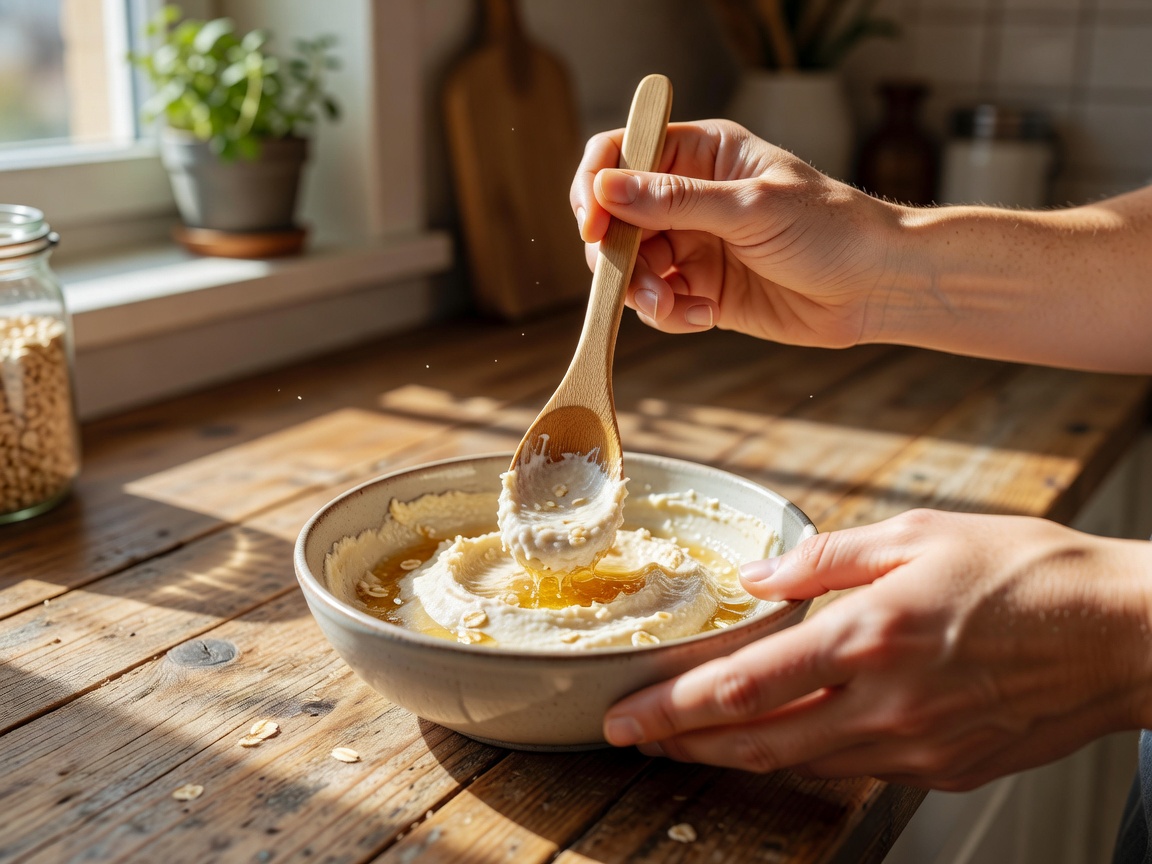
Oat and honey soother: one tablespoon of finely ground oats, one teaspoon of honey, enough plain yogurt or water to make a paste. Leave on for ten minutes, rinse with lukewarm water.
Banana and yogurt mask: a quarter of a ripe banana mashed with one tablespoon of plain yogurt. Ten minutes, then rinse.
Body polish (below the neck only): two tablespoons of fine sugar with one of sunflower oil. Use gently on dry elbows and knees.
"A good DIY mask is boring on purpose. Boring is how you avoid the A&E story."Roundtable notes, DIY thread
Plain take: edible does not mean skin-safe. Gentle pantry ingredients are fine for a fun, fresh, single-use mask; acids, spices and DIY sunscreen are not worth the risk.
Tried a recipe that went wrong, or right? Tell the table. For reactive skin, continue with gentle swaps.